A Burger King Worker’s Black-Painted Face Isn’t a Halloween Punchline.
A Burger King drive-through clip shows a worker wearing black face makeup. The identity and intent remain unverified. That does not make the imagery clever, harmless or funny.
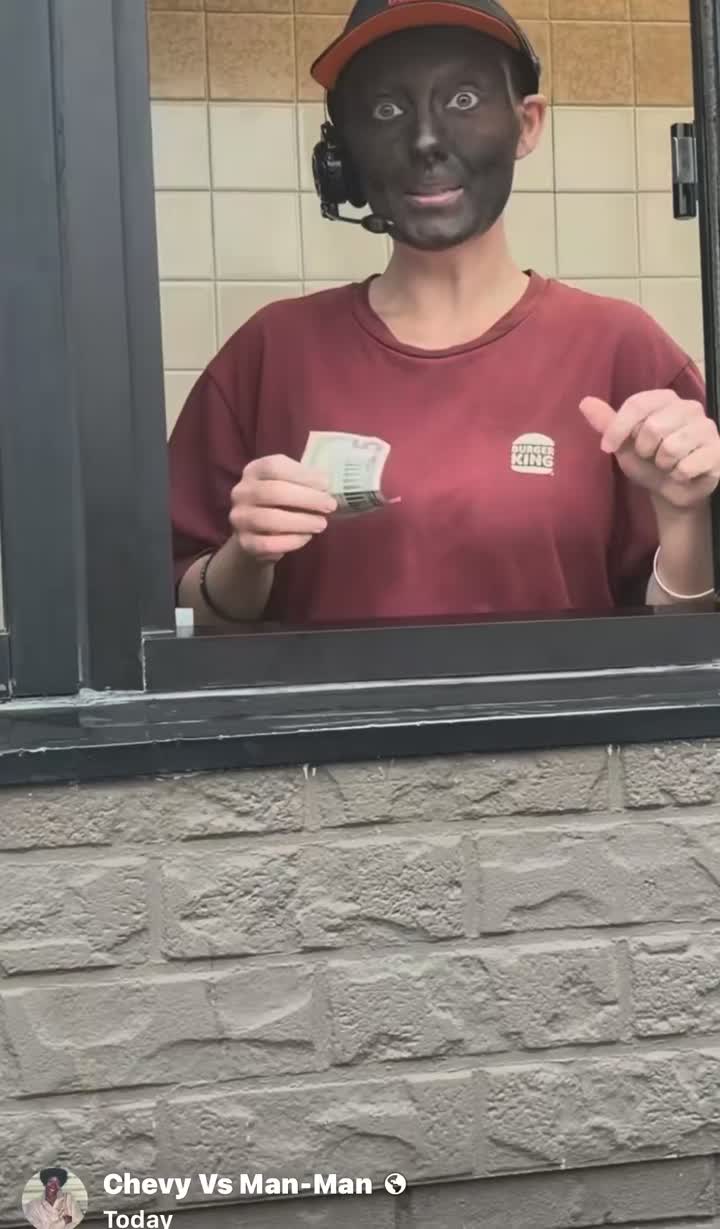
Somebody showed up at a Burger King drive-through with their face painted black, and here we are in 2026 being asked to treat the image as another harmless Halloween joke. No. A red uniform and a drive-through window don't make this comedy. The circulating video appears to show a worker wearing dark face makeup with stark pale outlines around the eyes. We haven't verified the worker's identity, the restaurant's location or the person's explanation. Those facts matter for reporting. They don't make the image any less disturbing, and they certainly don't obligate Black people to laugh at it.
BURGER KING CLIP · WHAT IS UNVERIFIED
- Visible scene
- Drive-through worker in dark face makeup
- Business
- Burger King-branded location
- Exact place and date
- Not independently verified
- Costume intent
- Unconfirmed
- Company response
- Unconfirmed
What the original material shows
The visible footage is straightforward. A worker stands at a service window in a red Burger King shirt and cap with a headset on, appears to speak to somebody recording from outside, and has his face coated in dark makeup. The social clip carries a Chevy Vs Man-Man label. It doesn't establish where this happened, when it was recorded, how the makeup was explained or what the company's management knew. Nobody should manufacture a person's real name or disciplinary history from a short video.

The obvious historical context is blackface. In the United States, blackface was not simply an old-fashioned way to paint a face for a performance. Nineteenth- and twentieth-century minstrel entertainment used exaggerated portrayals of Black people to ridicule them, normalize racist stereotypes and sell those caricatures as mass culture. The Smithsonian's National Museum of African American History and Culture documents how stereotypes in entertainment and advertising helped reinforce racial inequality. That history is why blackface imagery still creates such an immediate reaction.
The context that makes this matter
Here's the distinction people love to hide behind: we have not independently confirmed what the person meant to portray, so I won't invent their motive. But I also refuse to pretend nobody knows what blackface looks like or why it carries a history of humiliation. You can investigate someone's explanation without giving the imagery a free pass. The burden should not fall on Black people to prove, every single Halloween, why the same old racial caricatures aren't funny.
There's another layer when the person is apparently at work. A customer at a drive-through has no reason to expect to encounter racially loaded imagery from someone representing a business. Employers have policies, customer relationships and coworkers who may interpret an image differently from the person wearing the makeup. But it would be irresponsible to state that Burger King approved the appearance, that this location endorsed it or that a formal complaint was made when we have not verified any of that.
The defense always shows up on schedule: “It's just Halloween,” “people are too sensitive,” or “you can't joke about anything anymore.” Spare me. Creativity is not a shortage of racist imagery, and the point of a costume is that people recognize what you're presenting. I don't have to call for a stranger's firing, manufacture a corporate statement, or guess their private beliefs to say the appearance is foul. The people defending it as harmless are making a choice too, and that choice deserves criticism.
What gets missed in the reaction
The real problem with the 'just a costume' defense is that costumes are communications. The whole point is that someone else recognizes what you're depicting. If the audience reasonably associates the presentation with a history of racial caricature, saying the wearer was joking doesn't erase that association. There are a thousand ways to be funny or unsettling on Halloween without walking into a symbol that has been used to mock people for generations.
6IX TAKE — the argument
6IX TAKE — Fuck that. And fuck the idea that Black people are supposed to sit there smiling while somebody shows up with a black-painted face and everyone around them decides it's “just a joke.” Blackface isn't clever. It isn't edgy. It's a lazy, ugly callback to an entertainment tradition that made mocking Black people profitable and acceptable. In 2026, ignorance is a weak excuse for something with this much history behind it. I don't know this worker's name, which Burger King this is, or what they claimed the costume was. I'm not going to make up any of that. But I know what I'm looking at, and I'm not interested in doing gymnastics to make it sound innocent or funny. You want to be funny on Halloween? Be funny. You want to dress up? Dress up. There are millions of options that don't involve putting Blackness on like a punchline. The people rushing to defend the look should ask why they feel more urgency to protect somebody's “joke” than to understand why Black folks are tired of being that joke. Stop expecting a polite essay every time somebody does this bullshit. The history is already written. Read it.
Why the full clip matters
The original clip is here so readers can judge the visible footage for themselves. The historical explainer is separate and is not footage from this drive-through. We still need a verified location, recording date and statement from the worker or company before reporting those specifics as facts. None of that reporting discipline requires neutrality about blackface: the imagery is wrong, and the Halloween excuse isn't a defense.
HISTORICAL CONTEXT / SMITHSONIANSmithsonian: how racist caricatures became popular imageryHistorical basis for discussing blackface and racist imagery.
CONTEXT / HISTORYSmithsonian Magazine: the long history of racial parodyTraces blackface performance and racial impersonation in American culture.
Talk your shit.
Agree, disagree, add context, challenge the take. Keep it about the conversation.
Your account name stays attached to your comments, so nobody can just type your name and pretend to be you.