Frederick Put Its Climate Goals on a Dashboard. Cool. Now Show Us What the Fuck Is Changing.
Frederick city and county launched separate public climate dashboards with a 50%-by-2030 emissions target and a net-zero-by-2050 ambition. Residents deserve measurable results—not just charts.

Frederick's city and county governments launched climate dashboards October 1, and I actually like the idea. If officials are gonna make big public promises, residents should be able to open a website and see how the work is going without filing a records request or listening to a two-hour meeting.
But I'm not giving anybody a medal for publishing a dashboard. That's just the start. I wanna know what changed, what the taxpayers paid for, and whether the numbers are moving in the right direction. If the city puts up a beautiful bar chart and the real-world results don't move, what did we actually accomplish?
There are two dashboards because the governments aren't the same
Frederick City and Frederick County developed a community-wide Climate and Energy Action Plan with support from the Metropolitan Washington Council of Governments. The plan was produced in 2025, and the October 2026 launch put two separate public progress dashboards online.
The city dashboard focuses on municipal projects and city-specific goals. The county version reports broader county initiatives, including agricultural matters that don't belong only to city government. That's an important distinction. You shouldn't be able to hide behind the other government's numbers when something in your own jurisdiction isn't working.
The plan covers transportation, energy, buildings, forestry and waste. Officials also talk about preparing for flooding, drought and heat. Those aren't abstract issues to someone whose basement floods, electric bill climbs or neighborhood loses tree cover.
What the actual targets say—and what they don't
The stated shared goal is to reduce greenhouse gas emissions by at least 50 percent below 2010 levels by 2030, with an ambition to reach net zero by 2050. That's a goal, not proof that half the emissions have disappeared already. The dashboards and later inventories should show how much has actually been achieved along the way.
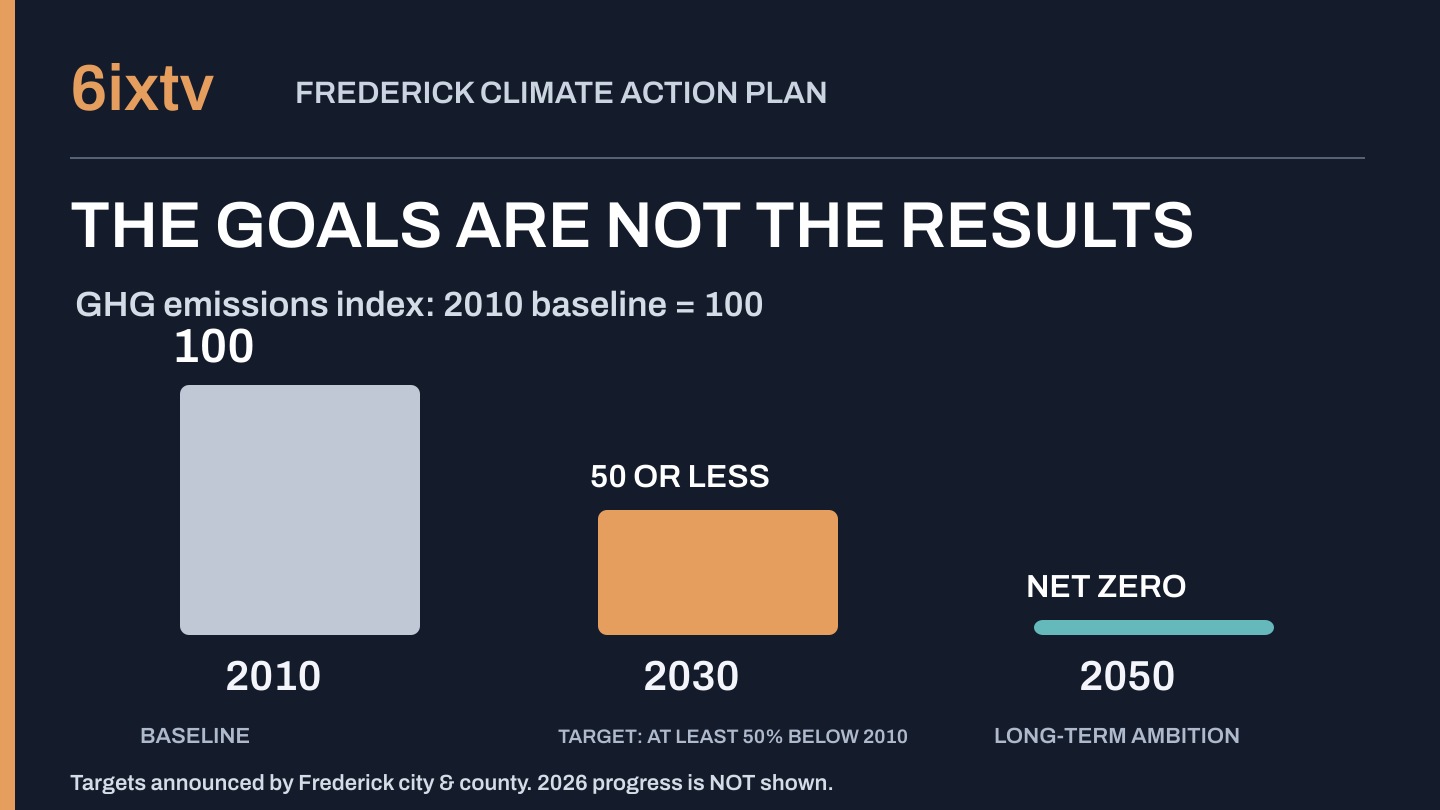
This is where I'd start asking questions. What was the actual 2010 baseline in tons of greenhouse gases? What's the latest independently calculated inventory? How often is it updated? Which projects are already finished, and which ones are still somebody's good idea in a spreadsheet?
If we're spending money on fleet vehicles, energy retrofits or solar installations, show the costs and measured effects. If we're protecting trees or addressing flooding, show the locations and the before-and-after. A number with no context isn't accountability; it's decoration.
Residents helped create the plan. They should be able to judge it.
According to the city and county announcement, more than 500 people took part in public meetings, workshops and events during planning, and more than 650 completed community surveys about climate impacts. That's a real amount of engagement, and I'd rather see people involved than have a policy quietly written behind closed doors.
But asking hundreds of people questions doesn't mean you get to declare success forever. Those residents should be able to see which suggestions actually became projects, what got rejected, and why. The city says dashboard numbers will be updated as new data arrives and included in the city's annual sustainability reporting. That's a promise readers can return to and verify.
The local costs have to be part of the conversation
Frederick isn't the only place dealing with climate decisions, but people in Maryland have specific everyday concerns: traffic, development, housing prices, energy bills, flooding and stormwater upgrades. A plan that sounds wonderful at a press conference has to explain what it means for the people paying for or living next to the changes.
I want residents to be able to click from a goal to the project carrying it out, then to the budget that funds it. Tell us when the update was last made. If we're behind the target, say that plainly. Don't bury it at the bottom of a chart where nobody except a policy analyst will find it.
My take: data is useful when it can hold somebody accountable
I don't hate the plan. I don't hate the idea of government tracking its work. I just don't want us acting like having two new URLs automatically equals progress. When a city tells taxpayers it'll cut emissions by half, that's a big commitment. If it works, great. Show it.
If it doesn't, explain where the obstacles are. Is the money missing? Is a project years behind? Are the measurements out of date? Transparency means giving people uncomfortable facts too, not just showing a progress bar every time a ribbon gets cut.
Don't give me a dashboard full of pretty colors and tell me to be impressed. Show me what got done, what it cost, and what's actually better.6ix / 6ixtv
The city and county deserve credit for making a way to track promises. Now let's see whether those promises survive the next budget, the next annual report and the next round of questions from the public.
Actual dashboards and primary documents
ORIGINAL CITY ANNOUNCEMENTFrederick City: City and County launch climate dashboards October 1Official announcement of 2030 and 2050 targets, public engagement totals and update commitments.
CITY DASHBOARD / PLANFrederick's Climate and Energy Action Plan siteCity source linking the actual city dashboard and plan components.
COUNTY DASHBOARD / PLANFrederick County Climate and Energy Action Plan siteCounty source linking the separate county dashboard, sector summaries and engagement details.
COUNTY POLICY COVERAGEMaryland Association of Counties: Frederick dashboard rolloutIndependent summary of the city/county launch and implementation metrics.
Talk your shit.
Agree, disagree, add context, challenge the take. Keep it about the conversation.
Your account name stays attached to your comments, so nobody can just type your name and pretend to be you.