Herbert Can’t Keep Being The Fire Extinguisher For A Team That Keeps Setting Shit On Fire
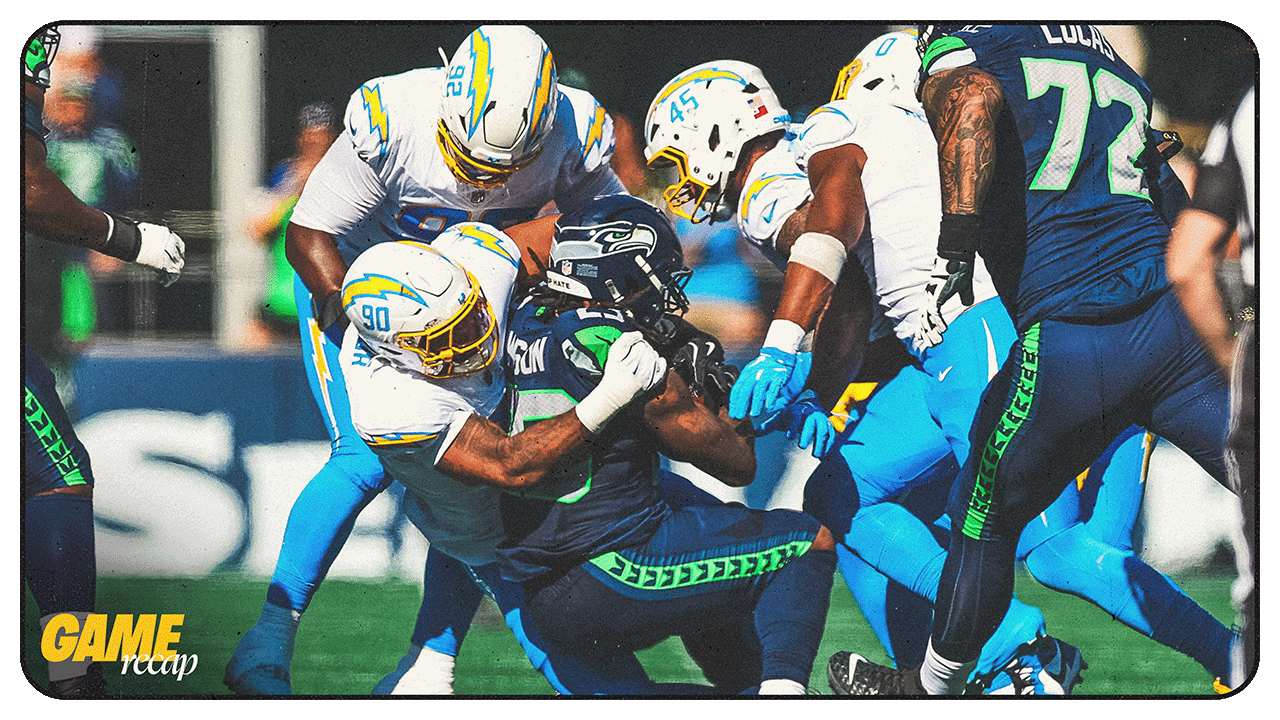
Four turnovers and 16 penalties. At some point “Herbert almost brought them back” can’t keep being the whole story.
This game was fucking disgusting. The Chargers turned it over four times, got called for 16 penalties for 130 yards, and Justin Herbert threw two picks before losing the fumble that ended the game. Seattle wasn’t exactly clean either — 14 penalties for 150 yards — so between the two teams there were 30 accepted penalties for 280 yards. That’s not football, that’s paperwork 😂. Herbert actually gave them a chance late after being horrible in the first half, and they cut a 21-point deficit down to seven, but then Uchenna Nwosu gets the strip-sack with a minute left and that’s it. You can’t keep asking your quarterback to fix every problem the rest of the team created for three quarters. Herbert absolutely owns his interceptions, but this whole operation looked sloppy as fuck.
Mistake counter
- Chargers turnovers
- 4
- Chargers penalties
- 16130 YDS
- Seattle penalties
- 14150 YDS
- Combined accepted flags
- 30280 YDS
- Herbert passing
- 189 YDS2 INT
Official Seahawks Week 4 highlights.
WATCH / OFFICIAL TEAMWatch Nwosu's game-sealing strip-sack ↗Uchenna Nwosu forces the fumble; Derick Hall recovers · Seattle Seahawks.
6IX TAKE
The Chargers cannot treat four turnovers and 16 penalties as a Justin Herbert problem alone. Seattle had 14 penalties of its own and still won; that tells me the Chargers' failure to protect possessions was the bigger separator.
And gambling-wise, this is exactly the kind of game that makes live betting and props annoying as hell because penalties and turnovers destroy normal game flow. Seattle’s skill guys still found the end zone — Emanuel Wilson twice, Rashid Shaheed, Tory Horton — while Herbert’s passing line ended at only 189 yards because half the game was getting wrecked by mistakes. So if I’m looking at the Chargers next week on FanDuel, I’m not just looking at Herbert’s talent and assuming a passing over is clean. I’m looking at protection, turnovers, how often they’re actually staying on schedule and whether this offense can stop putting itself in third-and-forever every other drive. Sometimes the matchup looks good and the team itself fucks the bet up before the player ever gets a chance.
Game script matters more than the name on the prop.6IX / FANDUEL NOTE
THE BIGGER PICTURE
Seattle won 30–23, and the Chargers managed to make the game far more difficult on themselves than it needed to be. Four turnovers are enough to swing almost any matchup, but the 16 penalties for 130 yards are the part that should really embarrass the coaching staff. Those are possessions and field-position advantages given away before an opponent has to do anything special. Herbert's mistakes count, absolutely, but blaming the quarterback alone would let everybody else off the hook. The Seahawks were not a model of discipline either. Fourteen penalties for 150 yards meant both sidelines were contributing to a game that kept losing its rhythm. The difference was Seattle still found the decisive plays, including the late strip-sack that killed Los Angeles' comeback. Herbert threw for 189 yards, and that passing total reflects an offense constantly trying to recover from self-inflicted damage. It is hard to establish a consistent passing attack when drives keep resetting after flags, turnovers, and bad protection. I would separate two questions before the next Chargers game. First, can the offense protect the ball and stay ahead of the chains? Second, can the staff get the team lined up and playing without all the unnecessary flags? Those are not complicated philosophical debates; they are the foundation of functioning football. Herbert should be held responsible for the interceptions and the late fumble. He should not be asked to rescue a team that spends the first three quarters setting itself on fire. Seattle gets the win because it finished the job, not because it played mistake-free football.
Talk your shit.
Agree, disagree, add context, challenge the take. Keep it about the conversation.
Your account name stays attached to your comments, so nobody can just type your name and pretend to be you.