Kyren Williams Didn’t Let Philly Get Away With This One
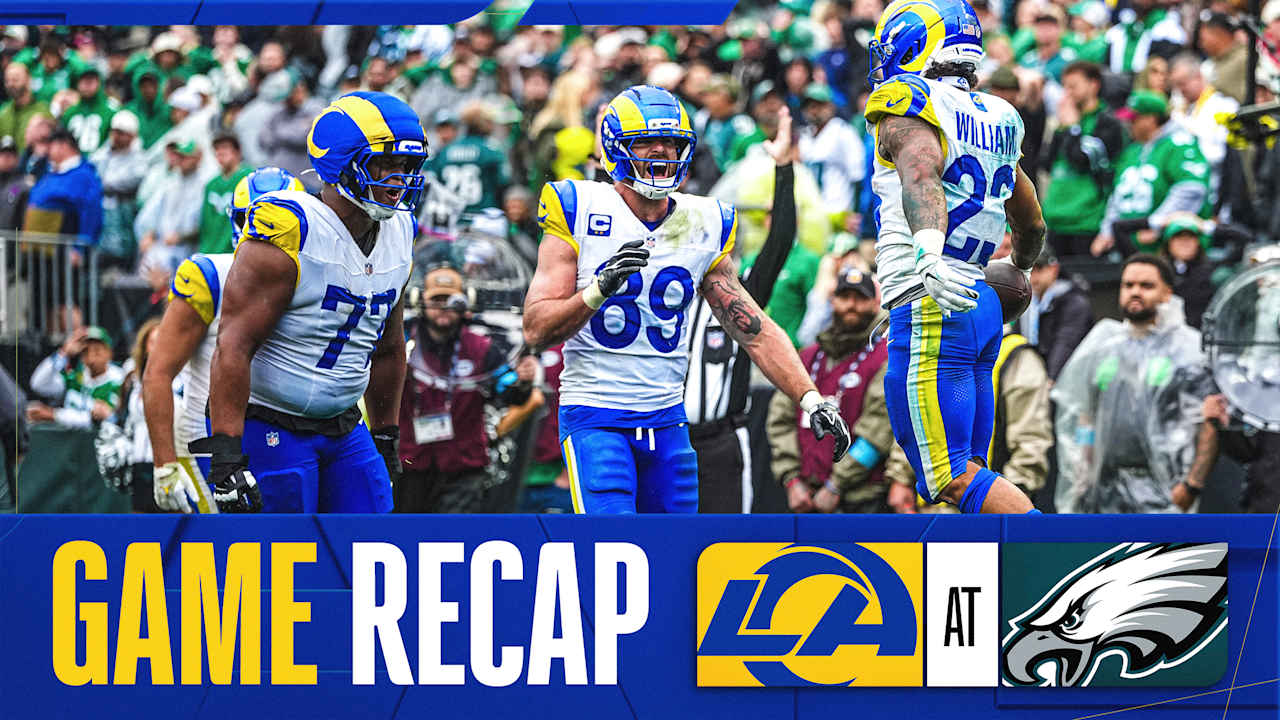
The Eagles had enough chances to close this game. Then Kyren scored twice in the fourth and reminded everybody that the fourth quarter still counts.
This the kind of game where you can point at the final score and still miss how much nonsense happened before the Rams won. Philadelphia was up 20-17 late, LA had already spent a good chunk of the afternoon making life harder on itself, and the Eagles still had an opportunity to put the whole thing away. Instead the Rams defense got another stop, Stafford got the ball back, and Kyren Williams finished it with a seven-yard touchdown. That was his second fourth-quarter score after punching one in from four yards earlier. The crazy part is Stafford wasn't even clean — two interceptions — but Kyren gave him a way out. He had 80 rushing yards and two touchdowns, then caught 10 balls for another 67. That's 147 yards from scrimmage without pretending he had to break a 70-yard run. Philly went 0-for-12 on third down. Zero. That's not a little fluke I can just shrug off because they almost won; it's why they couldn't put a team away that was offering them chances.
The comeback wasn't magic
- Kyren Williams
- 80 RUSH YDS2 TD
- Kyren receiving
- 10 REC67 YDS
- Kyren combined
- 147 SCRIMMAGE YDS
- Eagles on third down
- 0 / 12
Original Rams clip: four-yard rushing touchdown against Philadelphia.
WATCH / OFFICIAL NFL FOOTAGEThe winning touchdown ↗Original Rams clip: seven-yard go-ahead rushing touchdown with 1:10 left.
6IX TAKE
The Rams won 24–20 because they finished drives when the Eagles left the door open. Kyren Williams' fourth-quarter scores mattered, but Philadelphia's inability to put the game away was just as important to the story.
The FanDuel thought that sticks with me here ain't just 'Kyren scored twice, bet him again.' I'm looking at the way he got fed in two different phases of the game. Ten catches matters because the passing-game usage can keep him involved even if the rushing lanes look like shit. Then when LA needed touchdowns, he was still the one they trusted at the goal line. That's how I want to evaluate the next matchup: carries, targets, red-zone role, and whether the opponent is forcing checkdowns. A touchdown is the flashy receipt, but 26 combined carries and receptions tells me there was a real workload underneath it. Same lesson for Philly, just in reverse. A game can be close on the scoreboard and the offensive process can still look fucking broken when you keep wasting third downs. If I'm reading an Eagles player's prop next week, that's the context I'm bringing, not just 'they scored 20.'
Targets and goal-line work can tell me more than a pretty final score.6IX / WHAT I'M TRACKING
THE BIGGER PICTURE
The Rams beat Philadelphia 24–20, and Kyren Williams' late touchdowns are the obvious place to start. But the deeper story is how Los Angeles kept finding a path back into a game that the Eagles had chances to close. Matthew Stafford's 317 passing yards and Puka Nacua's 125 receiving yards gave the Rams multiple ways to move the ball. Williams supplied the finish. That combination matters because the defense cannot simply load up against one part of the offense without leaving something else exposed. Philadelphia's side of the game deserves just as much attention. The Eagles scored 20 points, which was enough to keep the Rams chasing for stretches, but they failed to turn control into a final answer. A fourth-quarter lead is not a trophy. When an opponent starts putting together scoring drives late, the offense has to respond by keeping the ball or producing points of its own. Philadelphia could not do enough of either when the pressure was highest. What I like about the Rams is that their late-game offense had an identity. Stafford could get the ball to his receivers, but Williams was the player who made the most important touches count. That does not mean the Rams are suddenly unstoppable or that the Eagles should panic after one result. It means Los Angeles demonstrated how to finish when the game got tight, while Philadelphia showed why protecting a lead requires more than waiting for the clock to expire. Those are the details worth carrying into Week 5.
Talk your shit.
Agree, disagree, add context, challenge the take. Keep it about the conversation.
Your account name stays attached to your comments, so nobody can just type your name and pretend to be you.