Week Four Was An Injury Report Disguised As A Football Sunday
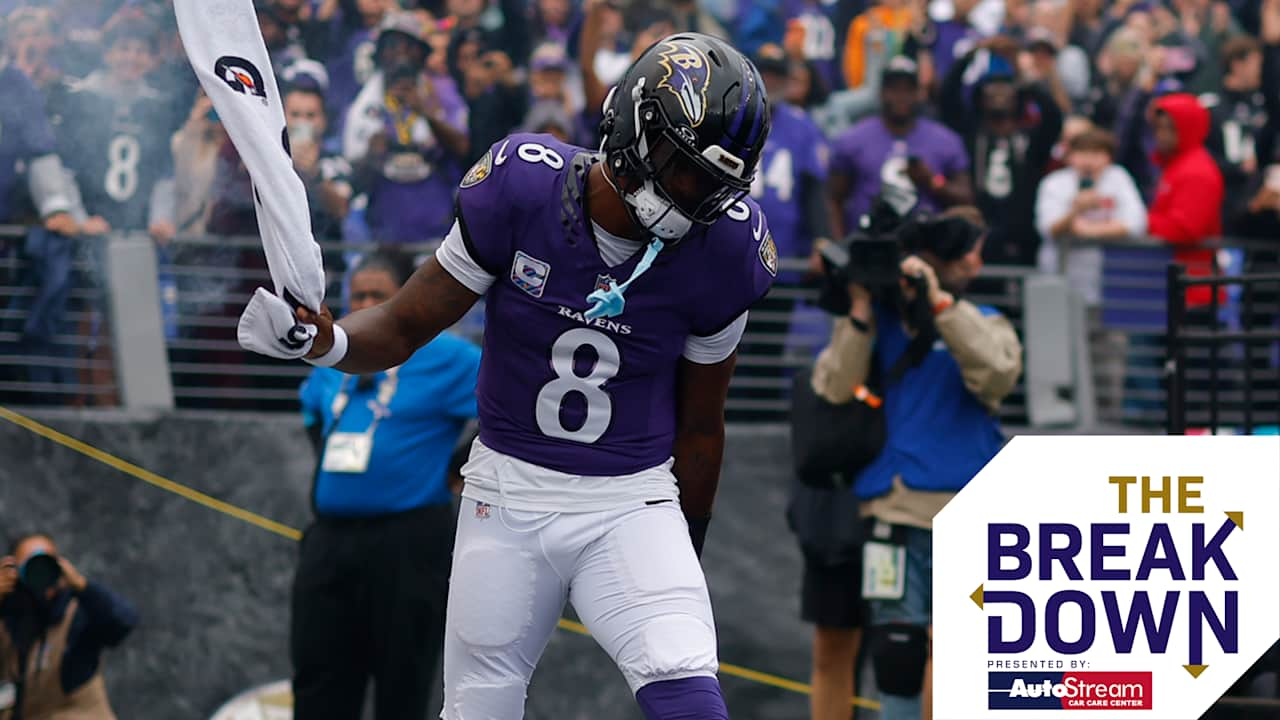
Lamar, Chase, Barkley, Thornton, Washington's quarterbacks. At some point the injuries weren't a footnote — they were the whole story.
This weekend felt like somebody turned injuries up to the highest difficulty and forgot to turn them back down. Lamar Jackson throws for 222 and two touchdowns in a half, leaves with an ankle injury, and Baltimore doesn't score again. Washington was already missing Jayden Daniels and Terry McLaurin, then Marcus Mariota goes down too, and suddenly a whole different quarterback is trying to hold that shit together. Cincinnati loses Ja'Marr Chase to a concussion and Tee Higgins is dealing with an injury of his own. Philly had Saquon Barkley's hamstring situation, and Kansas City saw Tyquan Thornton's big day end with a serious ankle injury. None of these are little details. Those guys change who gets the football, how a defense lines up, and what the offense can actually ask somebody to do. Watching the scoreboard alone, you'd miss half the story of Week 4.
Availability changed the stories
- Ravens
- Lamar Jacksonankleleft game
- Washington
- Marcus Mariotaexited
- Bengals
- Ja'Marr Chaseconcussion
- Eagles
- Saquon Barkleyhamstring
- Chiefs
- Tyquan Thorntondislocated ankle
Original reporting on Lamar's exit and the Ravens' scoreless second half.
WATCH / OFFICIAL NFL FOOTAGEThe Chiefs-Raiders game footage ↗Original team highlights for Thornton's 111-yard, two-TD performance.
6IX TAKE
Week 4's injury story is not a substitute for the games themselves. The responsible takeaway is to separate what teams executed from what changed after key players left, especially Baltimore's offense after Jackson's ankle injury.
A good number with the wrong lineup behind it is a different bet.6IX / INJURY CONTEXT
THE BIGGER PICTURE
The Week 4 scoreboard had real football stories in every window, but the injuries kept changing the questions those games were supposed to answer. Baltimore's 24–18 win over Tennessee is the clearest example. Lamar Jackson helped create a 24–7 halftime lead, then his ankle injury changed what the Ravens could do after the break. If you judge the whole game as one uninterrupted performance, you miss the most important context. The same principle applies whenever a team loses a starter at a position that changes its entire approach. Washington's 30–13 loss to Indianapolis in London deserves the same kind of careful reading. The Commanders were already dealing with quarterback uncertainty and other absences, and the game became a test of how much a damaged roster could execute under pressure. That does not excuse penalties, missed assignments, or failed drives. It does explain why the score alone is a poor measure of what the original game plan could have produced. Injuries can change the ceiling of a team without erasing responsibility for what happens next. For a sports site, the job is to tell both parts of the story. Report the final result and the players who delivered it. Then explain what changed, when it changed, and how the coaching staff responded. Otherwise an injury becomes either a lazy excuse for a loss or a footnote that gets ignored because the team happened to win. Neither is good analysis. Week 4 was a reminder that availability is part of competition, but so is the ability to adjust when the roster you prepared with is not the roster finishing the game.
Talk your shit.
Agree, disagree, add context, challenge the take. Keep it about the conversation.
Your account name stays attached to your comments, so nobody can just type your name and pretend to be you.